Get Certified. Get Ahead.
Best-selling IT author, presenter, and curriculum developer.
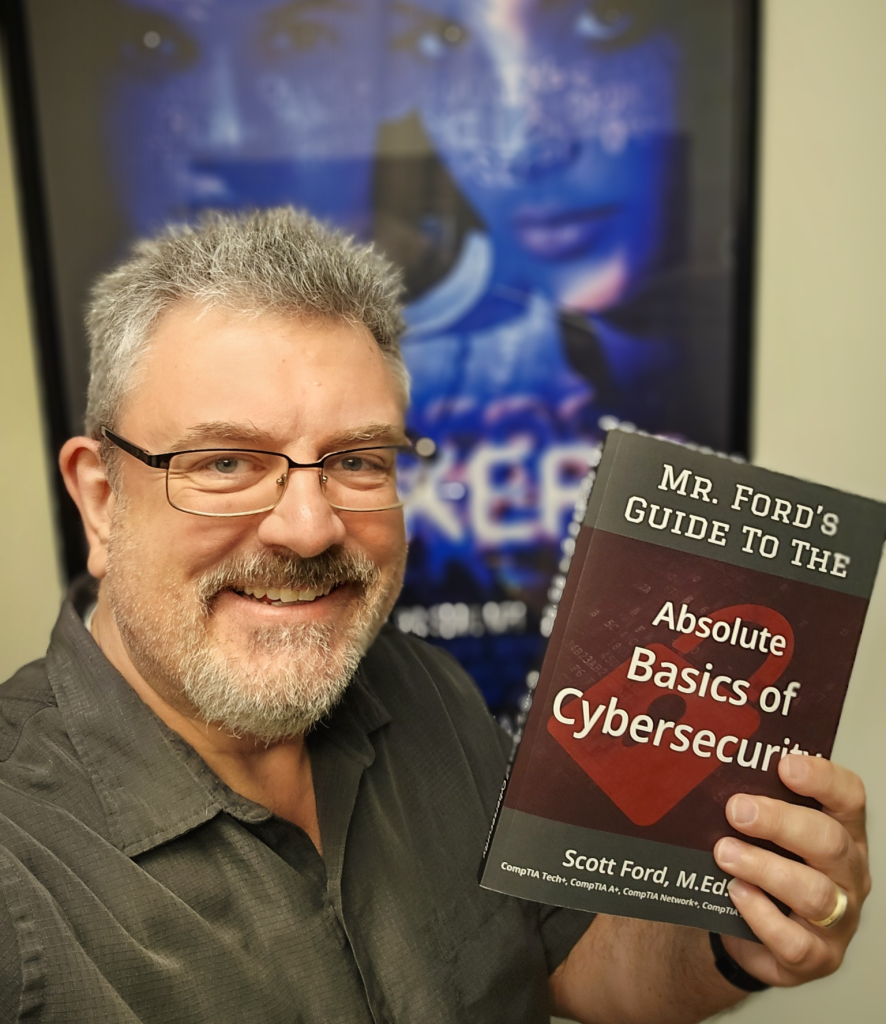

Student recognized
A former student of mine is recognized at a Humble ISD school board meeting

Classroom teacher
I went back to the classroom to rebuild an IT Certification program.

Author
Currently the author of two bestselling IT books on Amazon and B&N
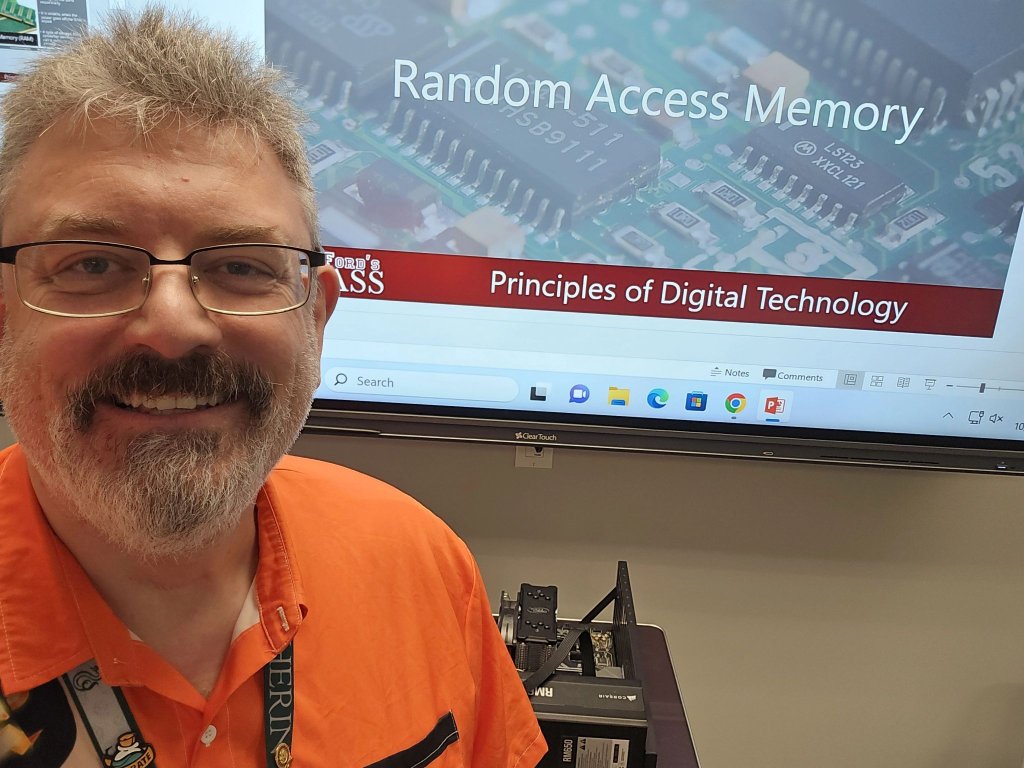
Presenter
I have presented at local, state, and national conferences.
Who Is Mr. Ford?
Scott Ford, M.Ed., is a bestselling IT author, presenter, and curriculum designer who empowers teachers, students, and communities through technology education.
His best-selling books are on Amazon and Barnes & Noble. He also has the best in industry IT Certification curriculum online.
Our Featured Books
You can find my best-selling IT and IT Certification books on Amazon and Barnes & Noble.
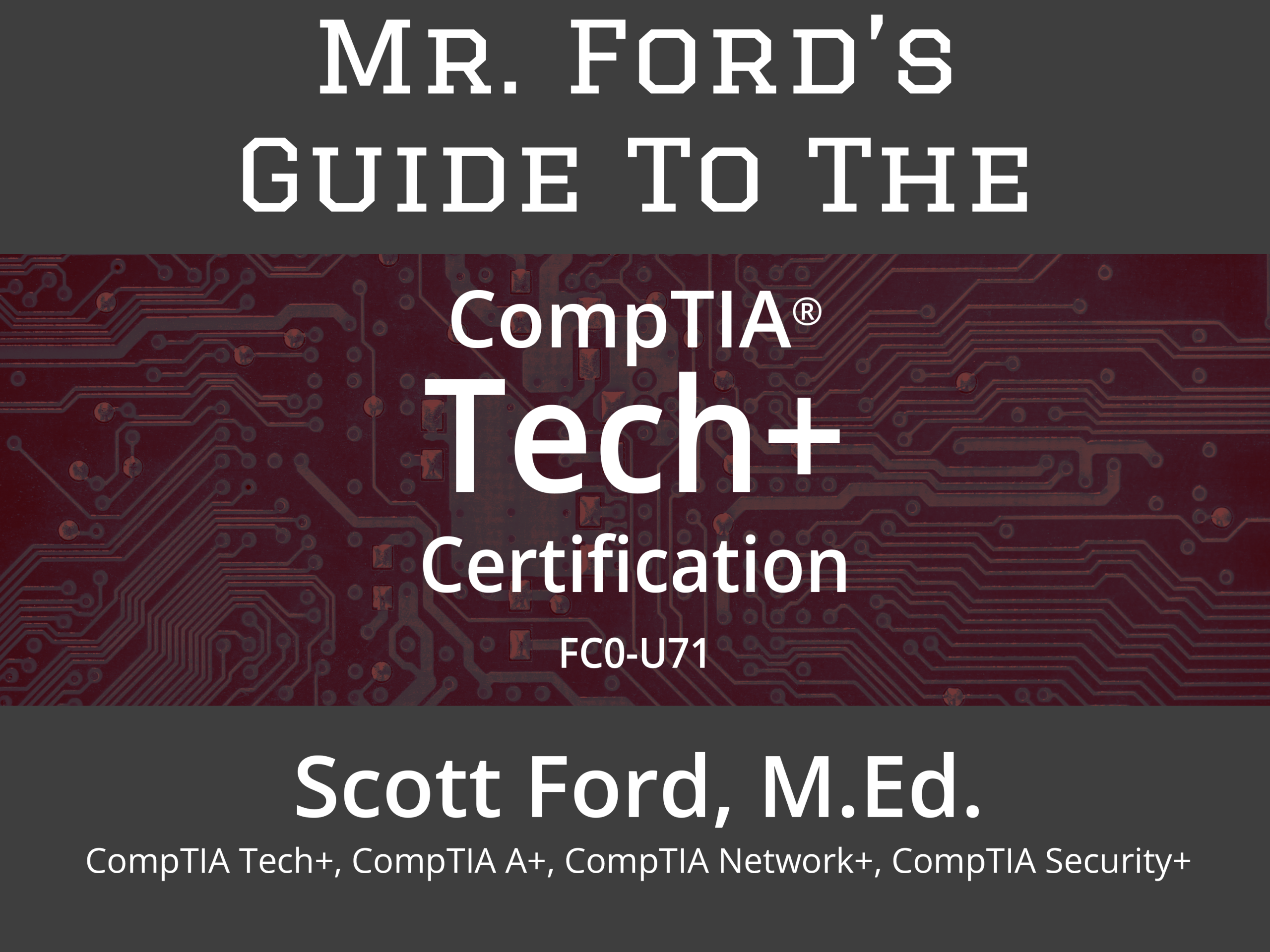
Mr. Ford’s Guide To The CompTIA Tech+ Certification FC0-U71
The most comprehensive CompTIA Tech+ certification book on the market. Let me help you pass the CompTIA Tech+ exam.
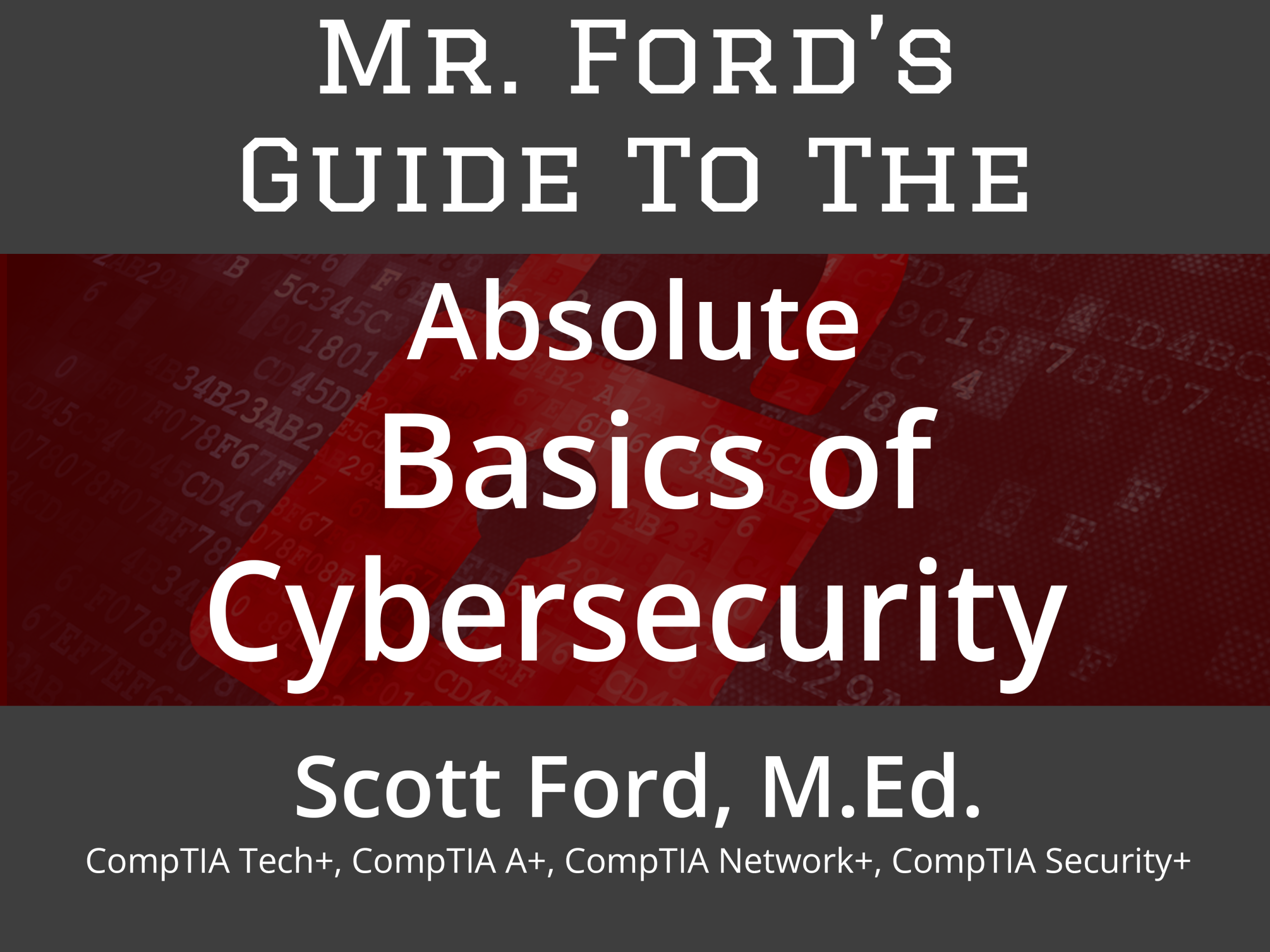
Mr. Ford’s Guide To The Absolute Basics of Cybersecurity
Learn the absolute basics of Cybersecurity.
Innovative IT Training Programs Offered
01
Best Selling IT Certification Books
Mr. Ford’s Guide To The Absolute Basics of Cybersecurity
- #1 Amazon New Release in Security Certification
- #1 Amazon New Releases in Computer & Technology Certification Guides
Mr. Ford’s Guide To The CompTIA Tech+ Certification FC0-U71
- #20 Amazon CompTIA Certification Books
- #1 Best Seller in Wireless Computer Networks
02
Teacher Resources via Teacher Pay Teacher (TPT)
Explore a wide range of IT certification resources on my Teacher Pay Teachers page, rated 4.8 out of 5 by educators.
03
Complete Online Course
A complete solution for public, private, charter, and homeschool programs. Perfect for Principles of Information Technology and introductory computer courses, fully aligned with the CompTIA Tech+ certification objectives.
Events and Training

AI Training for Teacher
Empower your teaching with AI. In just one day, learn time-saving strategies that free you up to focus on what matters most—your students.
TDB
Past Newsletters
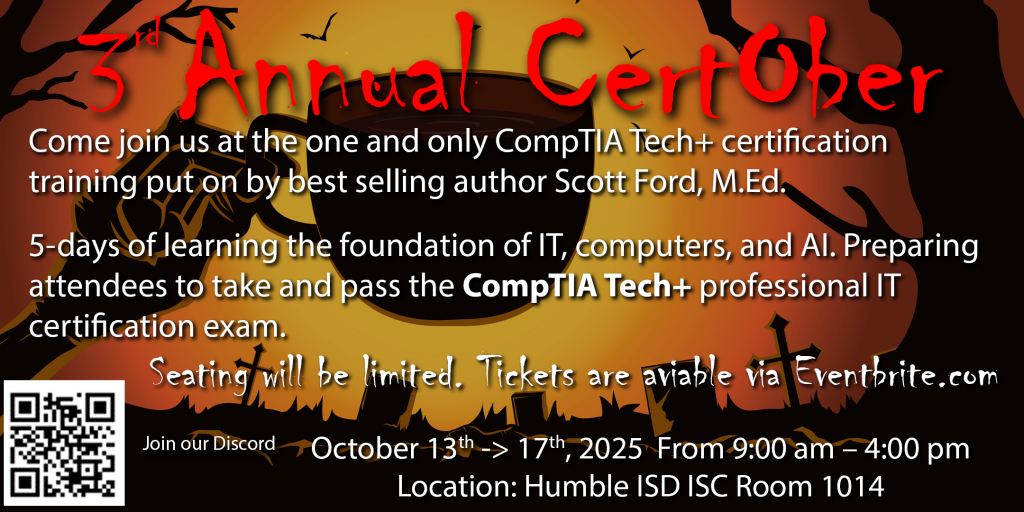
- 3rd Annual CertOber – Tickets are going fast
- 3rd Annual CertOber – 🎃 We are back for our 3rd year! 🎃
- Thank you, thank you, thank you – #1 New Releases in Security Certifications on Amazon
- Book Announcement – Cybersecurity is for everyone
- Coming Soon! – Updates and another big announcement
- Book sale and celebrations – Happy Back To School
- Live on Amazon and Barnes & Noble – Mr. Ford’s Guide to the CompTIA Tech+ Certification
- What happened to summer? – Study groups and a new book?
- July Study Groups- Get your certifications before the new school year.
- Our First Newsletter – IT Certification News